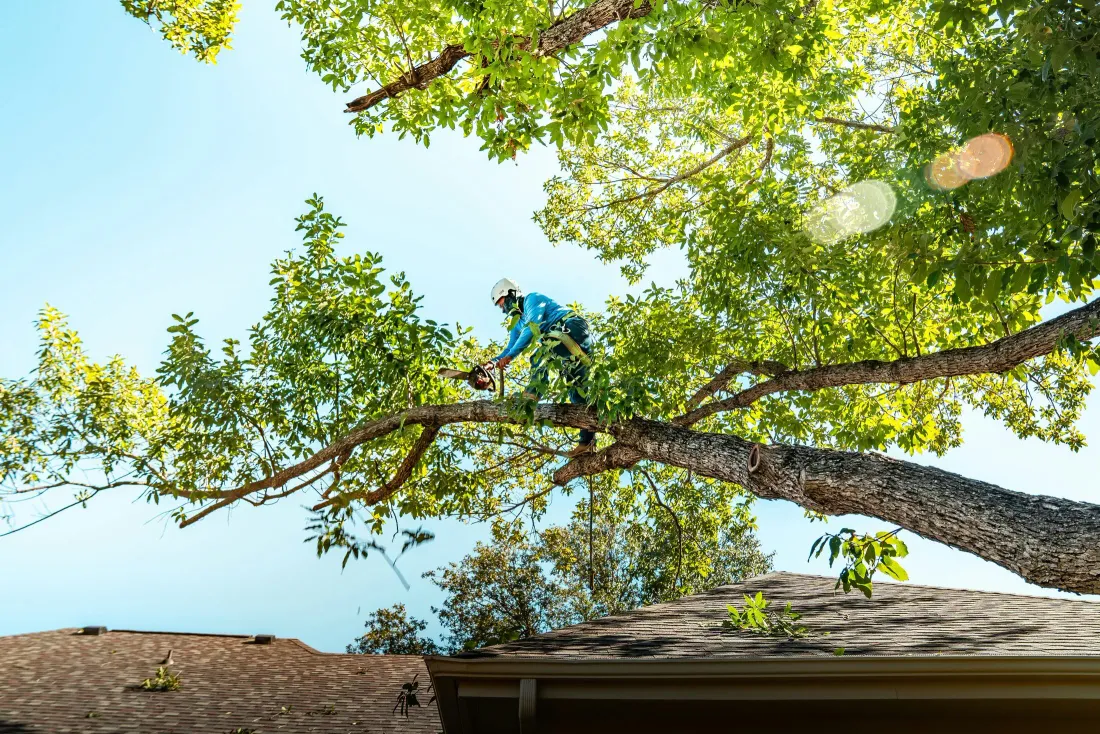
What "trimming" includes
"Trim my tree" covers several different jobs, and the price depends on which one you mean. A provider will usually describe the work in one of these terms:
Crown cleaning
Removing dead, dying, diseased, and crossing limbs throughout the canopy. The most common residential trim and the baseline for the $450–$668 range.
Crown thinning
Selectively removing live limbs to let wind and light through a dense canopy. Reduces storm load; done wrong it stresses the tree, so ask how much they intend to take.
Crown raising
Removing lower limbs for clearance over a driveway, sidewalk, roof, or lawn. Often the quickest trim, and often combined with cleaning.
Crown reduction
Shortening the canopy back to strong lateral limbs. Legitimate for clearance from a structure or line; not the same as topping, which cuts to stubs.
What moves the price
We don't have Modesto-verified trimming figures broken out by tree size, so we won't present a size table as if we did. What we can tell you is how providers build a trimming quote: size and canopy spread set the base (a 60-foot shade tree is a multi-hour climb; a 15-foot ornamental is a ladder job); amount of deadwood adds time and, if the wood is brittle, risk; what's underneath — roof, pool, power line, neighbor's yard — determines whether limbs can be dropped or must be rigged and lowered; access for a truck and chipper determines how the brush leaves; and how long it's been since the last trim, because a neglected tree is two trims' worth of work.
When trimming is the wrong call
Trimming fixes a healthy tree's problems. It doesn't fix a dying tree. If more than roughly half the canopy is dead in the growing season, the trunk is split, there's fungus growing from the base, or the tree has developed a new lean with the soil lifting, a trim is $450–$668 spent on a tree you'll pay $535–$726 (or $1,000+ if it's over 60 ft) to remove next year. Read the warning-signs guide first, and ask the provider outright: "Is this tree worth trimming?" A good one will tell you.
Topping: the cheap trim that costs the most
Topping — cutting the main limbs back to stubs to make a tree shorter — is fast, which is why it's cheap and why some crews push it. It leaves large wounds that don't close, triggers a flush of weakly attached sprouts that break in the next storm, and often starts the decline that ends in removal. If you need a tree shorter for clearance, ask for a crown reduction to lateral limbs. If a provider recommends topping as routine maintenance, that's the information you needed about them.
Street trees and licensing
Two things that apply to trimming as much as removal. First, a City street tree — the one in the parking strip in front of your house — is the City's tree in Modesto, and in Turlock a Street Tree Permit is required before pruning one; see the permit page. Second, California requires a CSLB-licensed contractor (C-49 Tree and Palm) for any job over $1,000 in labor and materials; a single trim often sits under that line, but a crew of two fails the exemption's no-employees condition on its own. The licensing section of the cost guide has the details, and the vetting checklist applies to any trim quote.
Ready for a quote? Tell us about the tree and what you want done, and we'll match you with a local provider who serves your part of Stanislaus County.