Why palms are their own trade
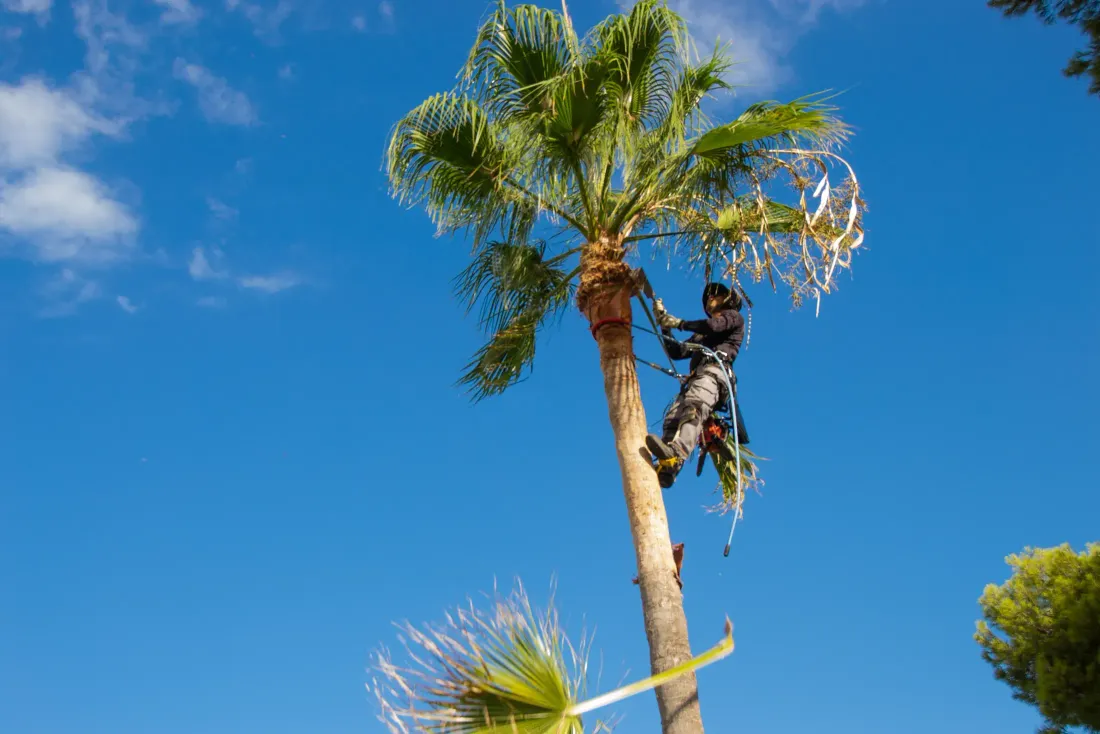
A shade tree comes down in pieces: limb by limb, then trunk sections, most of it through a chipper. A palm has no limbs. It's a single fibrous trunk, often very tall, topped by a crown of fronds that on fan palms can be wrapped in a "skirt" of dead fronds weighing hundreds of pounds. Crews climb it with spikes or reach it with a bucket truck, take the crown off, and cut the trunk into sections that are wet, dense, and heavy for their size. Palm wood doesn't chip cleanly and doesn't burn well, so it usually leaves as bulk green waste — and that disposal is a real share of the price.
Because of all that, some general tree companies quote palms high or decline them, and a couple of Modesto-area providers specialize in them. When you're getting quotes, ask how many palms the crew has taken down this year. It's a fair question and the answer tells you a lot.
How palm removal is priced
We publish only figures we've verified locally, and none of them is palm-specific, so here's the honest version. Providers price palm removal on height (a 20-foot queen palm and a 70-foot fan palm are different jobs), species (fan palms with a heavy skirt cost more than a clean-trunked palm the same height), access (whether a bucket truck or crane can reach it, or a climber has to do all of it), what's underneath (a pool is the classic palm problem), and disposal. In Modesto, typical tree removal runs $535–$726, and trees over 60 ft run $1,000+; a tall palm over a pool with no truck access will land at the top of that or beyond. Palm stump grinding is the usual $75–$1,000, and palm stumps grind more easily than hardwood — the fibrous root ball is soft — so they often land toward the lower end for their size. Full breakdown of what moves any removal price is on the Modesto tree removal cost page.
Palm trimming: less is more
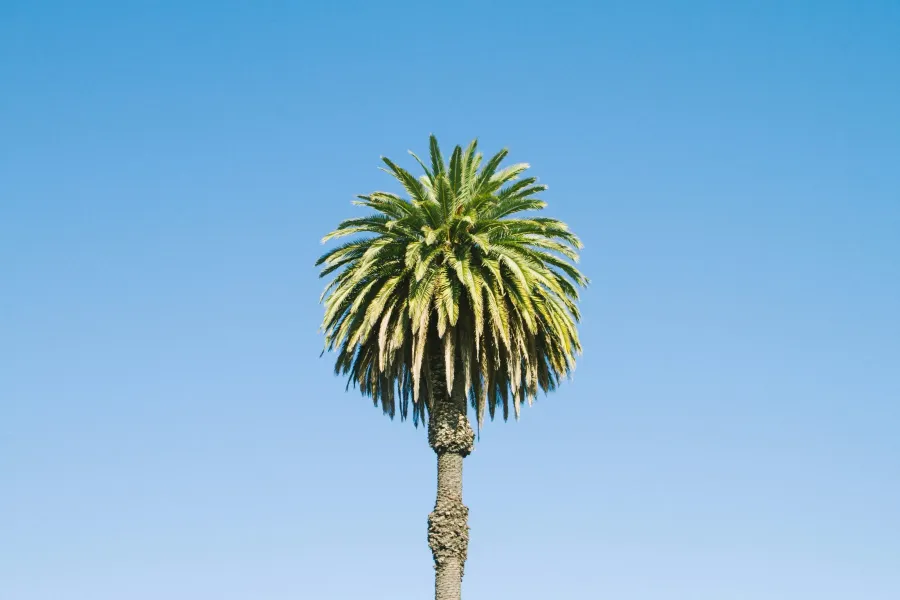
A healthy palm needs only its dead (brown) fronds and spent fruit stalks removed, usually about once a year. Green fronds are how the palm feeds itself; cutting them off above the horizontal — the "pineapple" or "hurricane" cut — starves the crown, narrows the trunk, and makes the palm more likely to fail, not less. A crew that trims palms hard because it looks tidy is doing the palm harm. Ask for dead fronds and fruit stalks only, and if the palm has a skirt you want removed, expect that to be priced as its own job.
Trimming a short palm from the ground with a pole saw is a reasonable homeowner job with gloves and eye protection. Anything on a ladder is not: palm frond skirts have trapped and killed climbers, and the fronds themselves are sharp and heavy. Tall palms are crew work.
Is the palm dead?
Palms have one growing point at the top of the trunk. If that dies — the crown collapses, the newest central fronds are brown and pull out easily, or the top of the trunk is soft — the palm is dead, and unlike a shade tree there is no "half dead." A dead palm trunk can stand for a long time and then fail without warning as it rots from the inside, which matters when it's next to a house, pool, or sidewalk. Yellowing outer fronds alone are usually nutrient stress, not death; a provider can tell the difference from the ground.
Permits and licensing
Same rules as any tree. A City street palm in the parking strip goes through the City of Modesto Community Forestry Division (the owner pays for removal and replacement); a palm on your own lot has no separate published removal permit, with the caveat on the permit page that we haven't confirmed the private-tree question either way. California's C-49 license classification is literally "Tree and Palm Contractor" — ask for the number and check it at cslb.ca.gov, and use the vetting checklist.
Have a palm that needs to come down or be cleaned up? Tell us roughly how tall it is and what's around it, and we'll match you with a local provider who handles palms.